

Brandon Day graduated from Ferris State's Professional Tennis Management program in 2022. Four years later he's the assistant director at a 31-court tri-racquet club, and he's not even 30. He got there by cold-calling Jarrett Chirico for an internship, starting at zero at Royal Oaks Country Club, and working his way from teaching pro to director of programming in under three years. We get into the real math of what young pros make, why burnout is a leadership problem, what certifications actually do for your career, and his goal to be a director by 28 in an industry where the average director is 55+.
Key Takeaways
- Cold-calling Jarrett Chirico for an internship and getting an offer letter on the spot.
- Starting at Royal Oaks making zero dollars and building a lesson book from scratch.
- The member who taught him what service actually means — and it had nothing to do with tennis instruction.
- Programming across tennis, pickleball, and padel without the three sports eating into each other.
- What certifications actually do for your career vs. what is just letters after your name.
- The real math of what young pros make: from $30K to $150K depending on region and contract.
- Why burnout in racquet sports is a leadership problem, not a work ethic problem.
- His goal to be a director by 28 in an industry where the average director is 55+.
More episodes
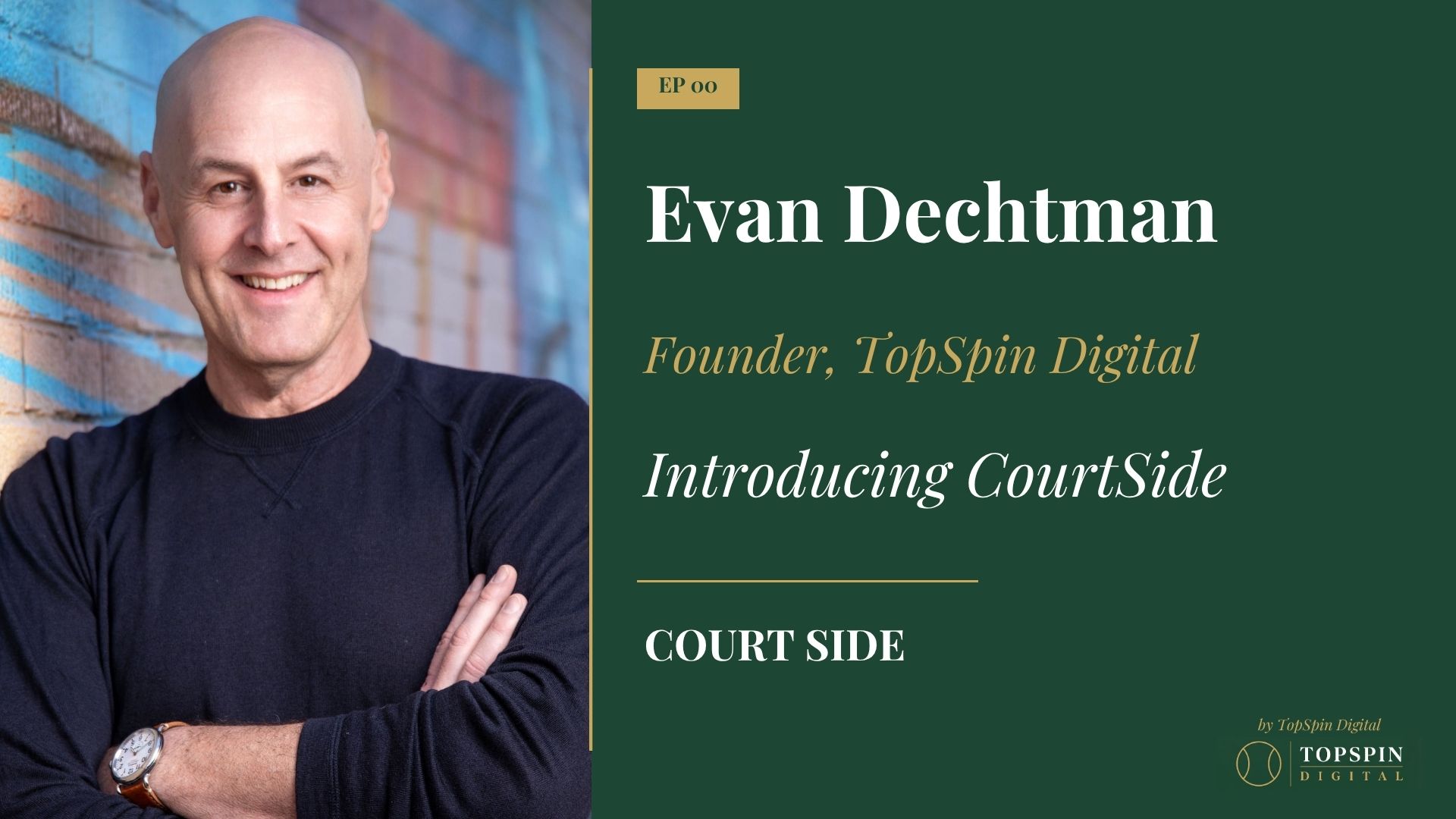
Evan Dechtman, TopSpin Digital
Founder
A short introduction to CourtSide: why we are building a long-form interview series for the people running racquet sports, what each episode looks like, and how to be considered as a guest.
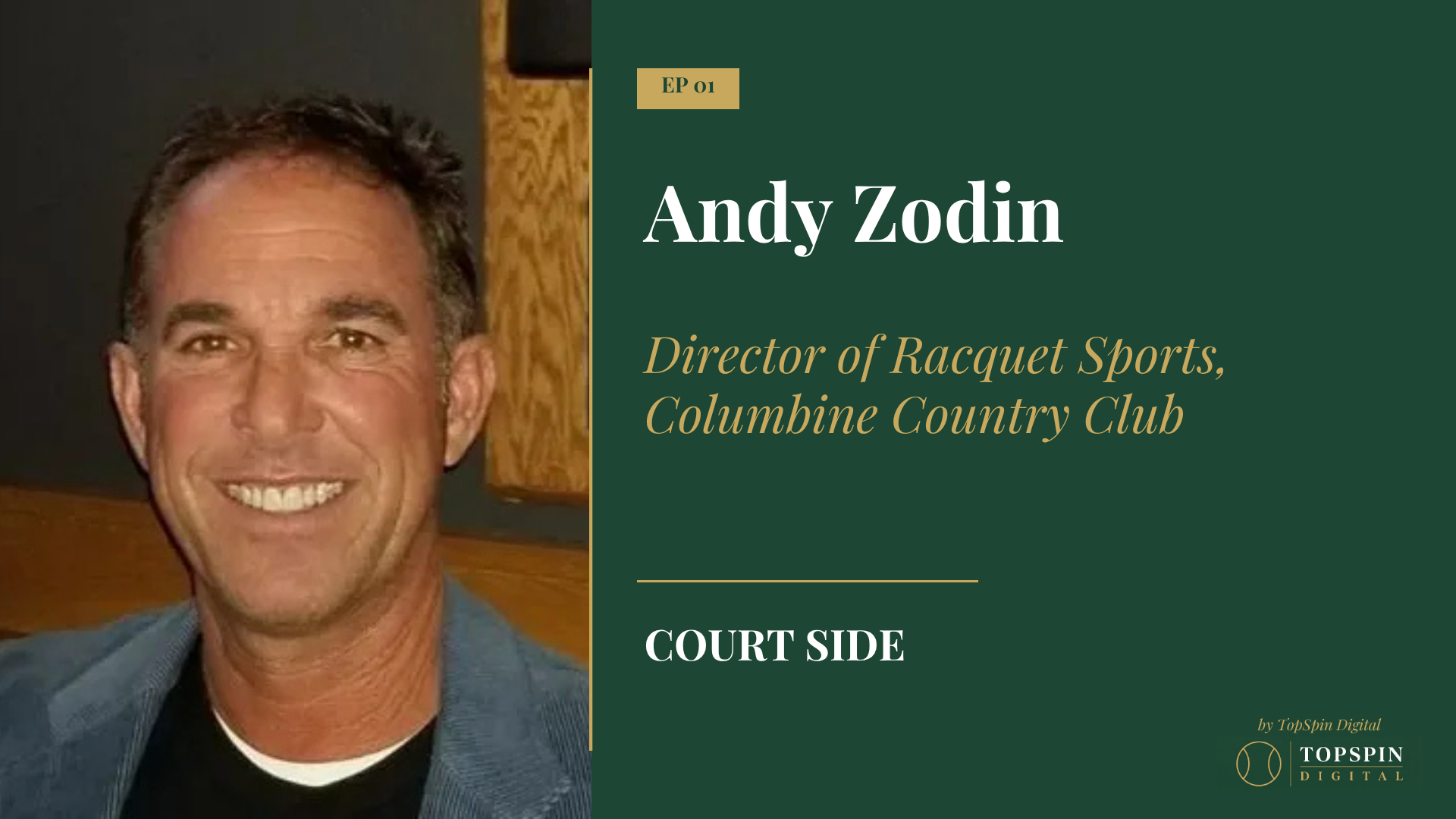
Andy Zodin, Columbine Country Club
Director of Racquet Sports
Andy Zodin on 15 years running racquet sports at Columbine Country Club, what a director actually does day-to-day, the ownership conversations that never go away, staffing teaching pros in 2026, and how private clubs are handling pickleball.
Julius Gavin, Tennis University
Independent Tennis Coach, Founder
Julius Gavin, known online as tennis.god, has nearly 90,000 Instagram followers, charges $1,000 for six hours of coaching, and claims he can build a complete tennis game in 40 hours. We get into the math behind the program, the fraud accusations, the real economics of driving thousands of miles with a trunk full of balls, and how short-form content converts a viewer into a paid client.